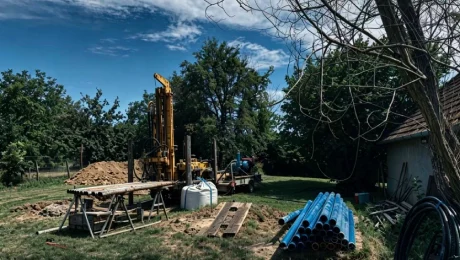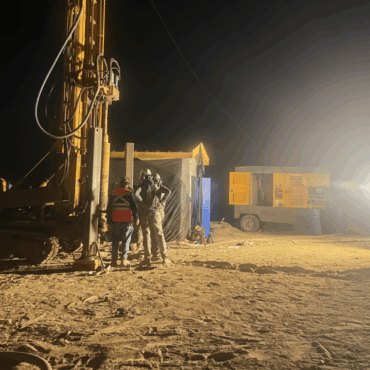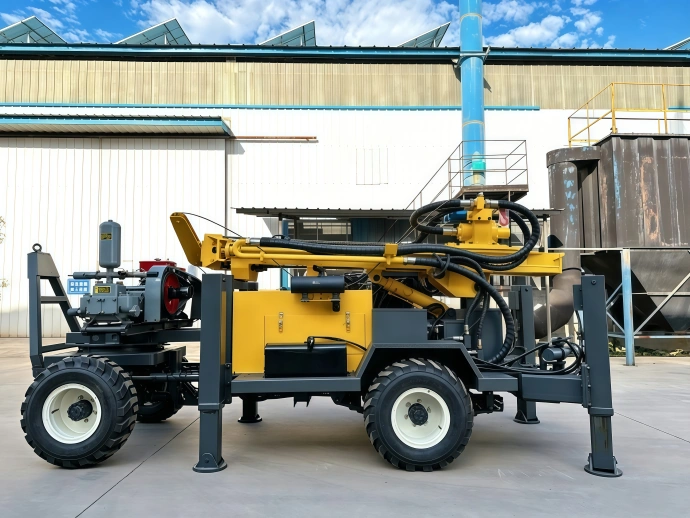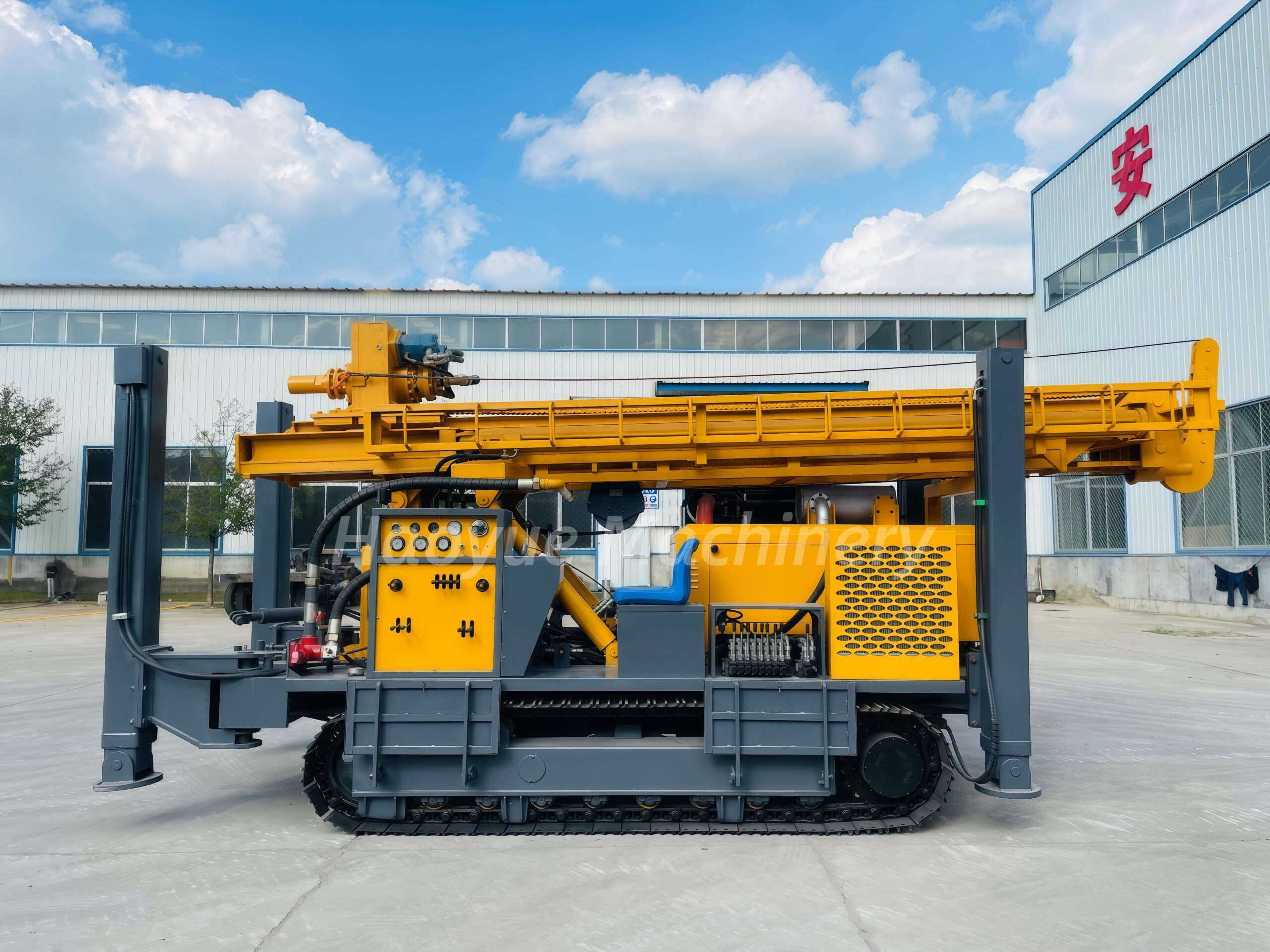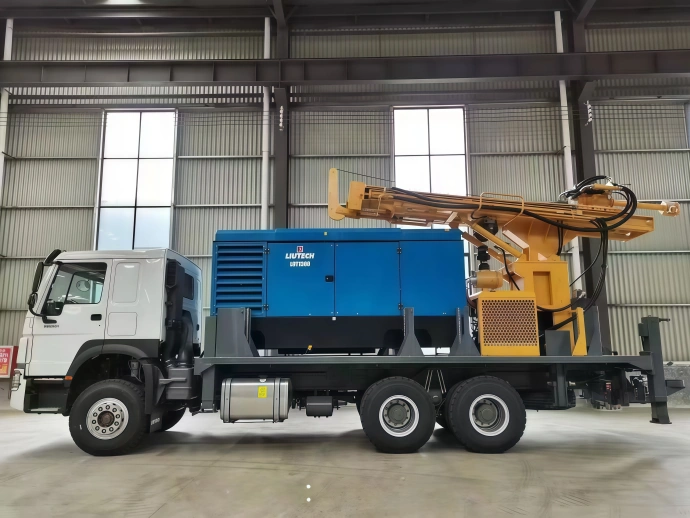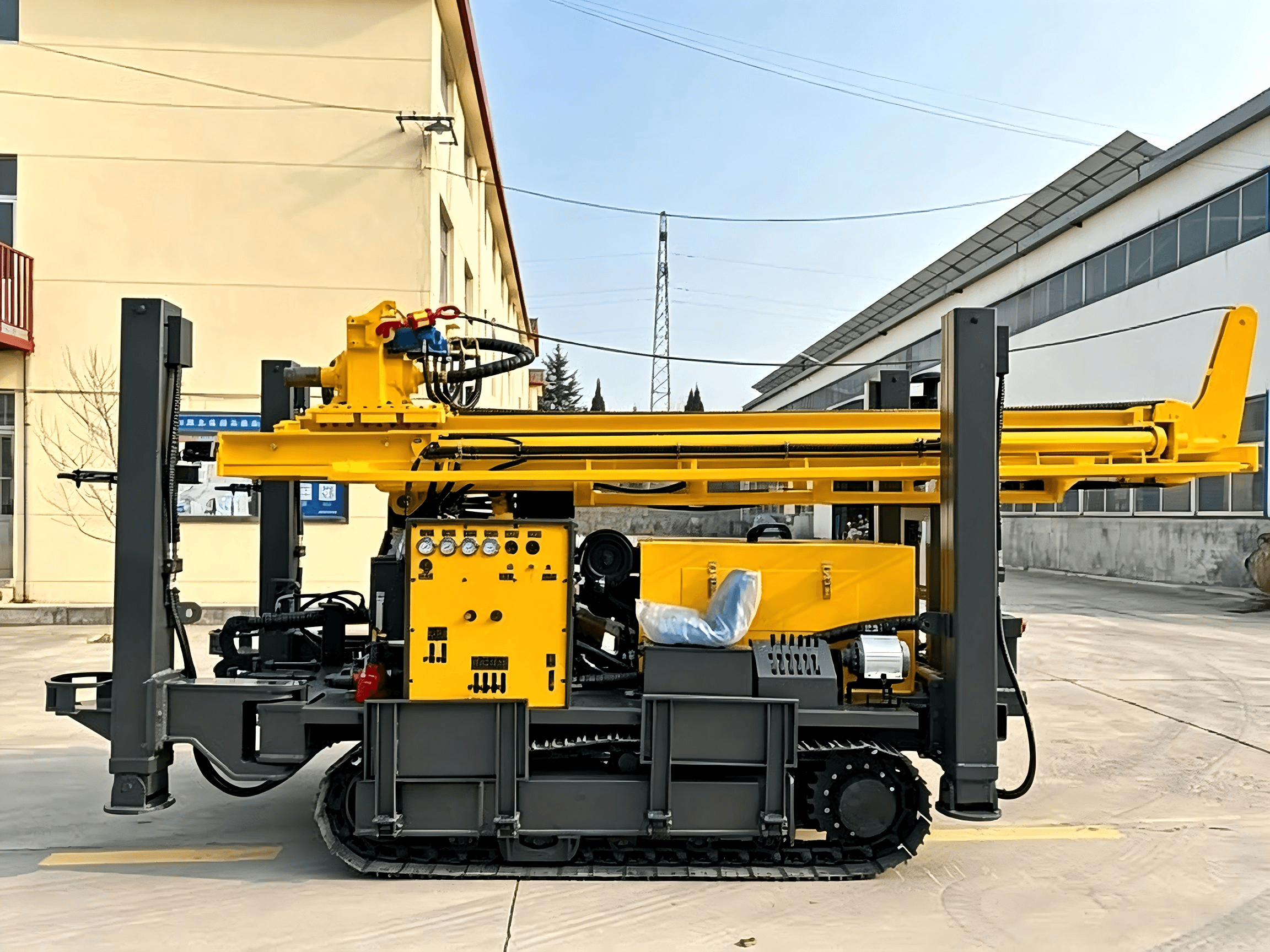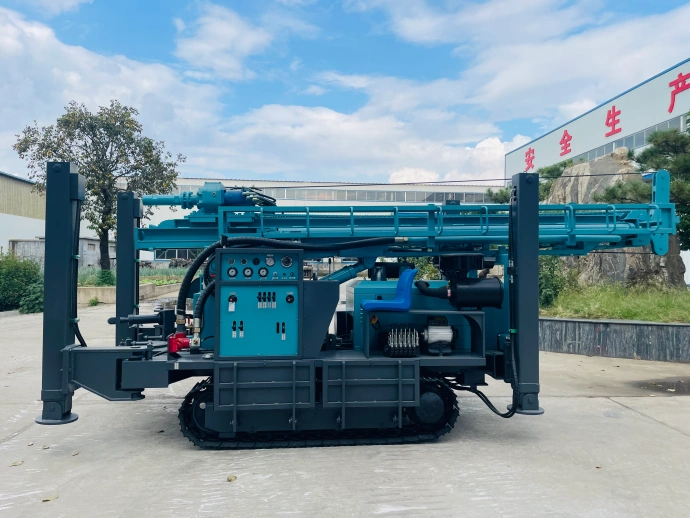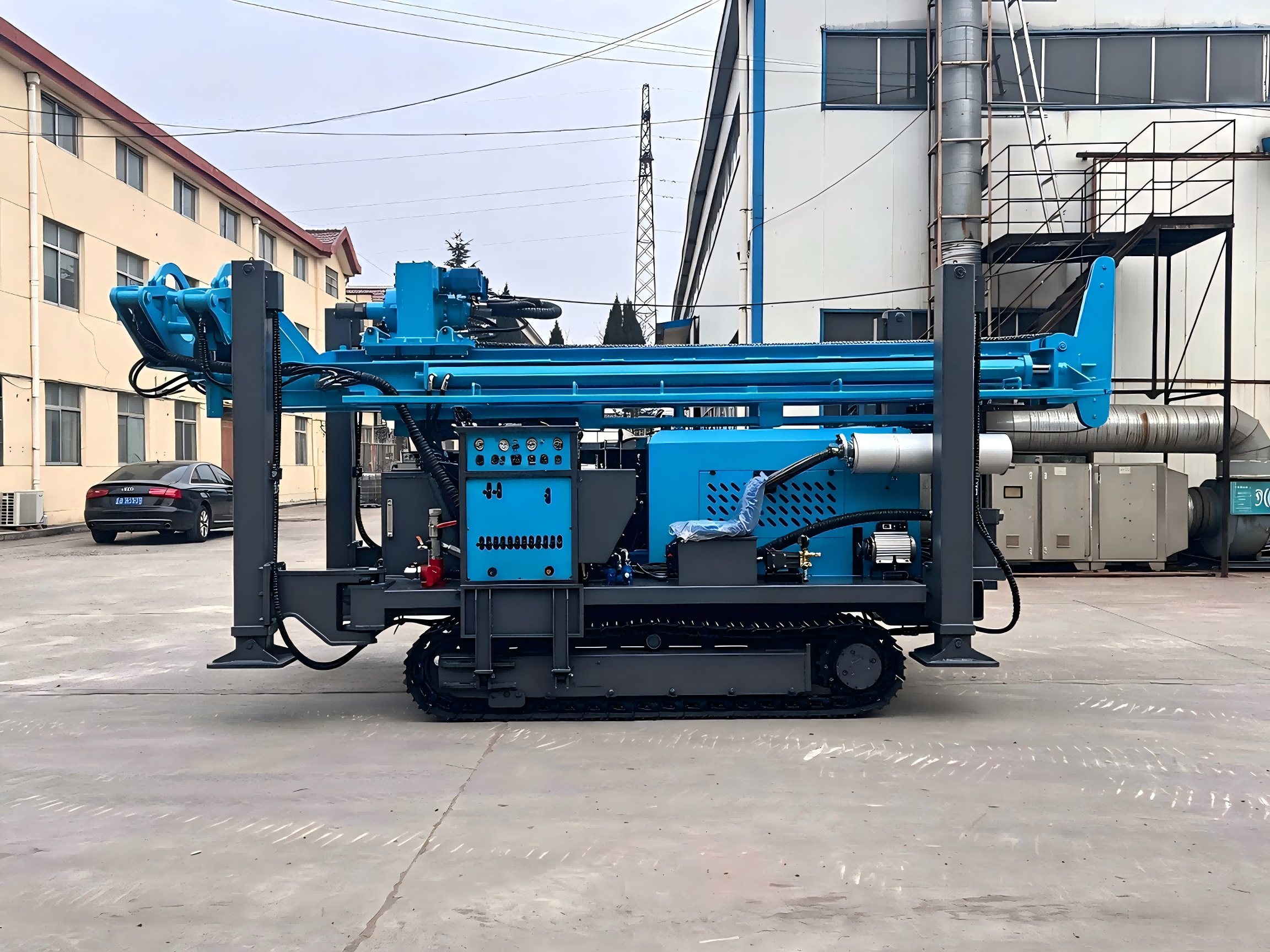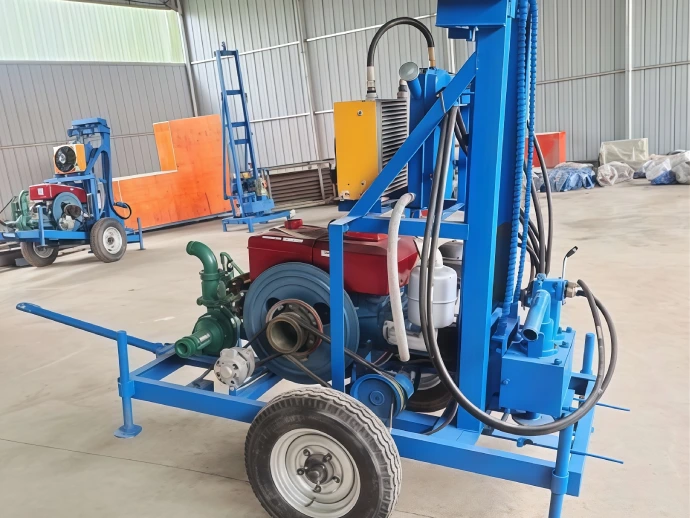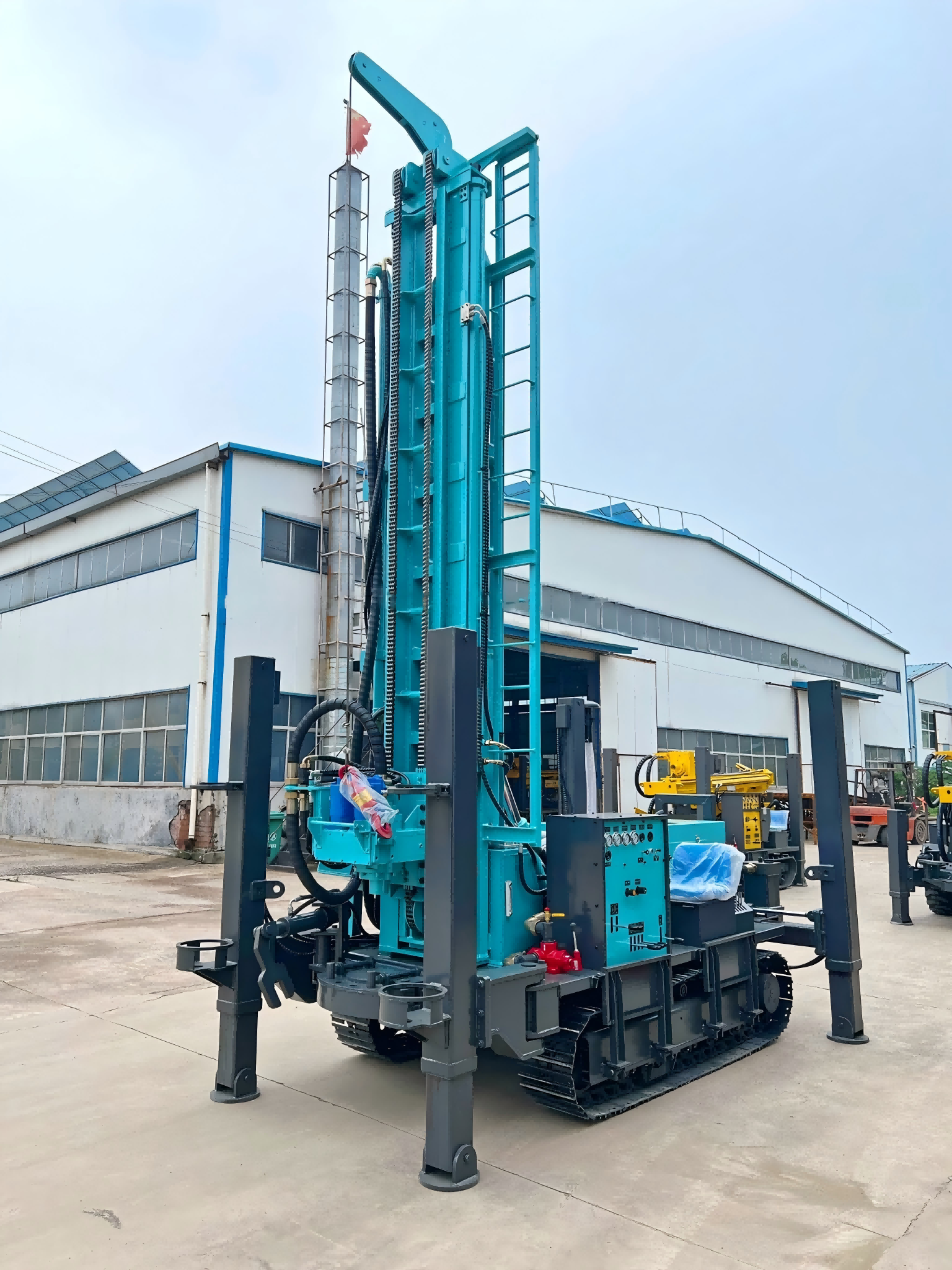
In water well drilling, the air compressor is essential core supporting equipment rather than an optional auxiliary tool. It directly affects drilling efficiency, wellbore stability and overall well forming quality. As the key power source for pneumatic drilling, it runs through the entire construction process and delivers irreplaceable technical advantages.
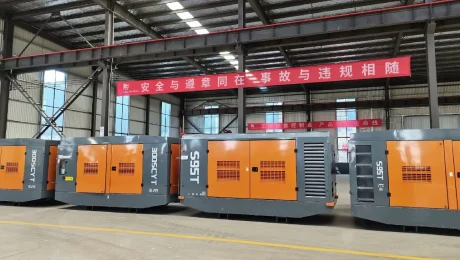
Core Functions of Air Compressors in Drilling
Air compressors provide stable high-pressure and high-volume compressed air. The airflow is transmitted downhole through the drill pipe to the drill bit, realizing multiple critical drilling functions.
1. Efficient Downhole Cuttings Discharge
This is the most basic and important function. High-velocity compressed air carries rock debris and soil cuttings produced during drilling and discharges them from the wellbore through the annular space. It prevents repeated grinding of bottom-hole cuttings, accelerates drilling progress and effectively reduces drill bit abrasion.
2. Drill Bit Cooling and Air Lubrication
Continuous friction between the drill bit and hard rock generates extreme heat, which causes bit wear and thermal damage. Circulating compressed air provides real-time cooling and forms a dry air lubrication layer, ensuring stable and continuous drilling operation.
3. Power Source for DTH Percussion Drilling
Pure rotary drilling is inefficient for medium-hard and hard rock formations. High-pressure air drives the internal piston of the DTH hammer to perform high-frequency reciprocating impact. This percussion rock-breaking method drastically improves penetration speed and is the key to efficient hard rock drilling.
4. Wellbore Stabilization for Unconsolidated Strata
Compressed air balances downhole pressure, restrains loose gravel and fractured rock from collapsing, and controls sand leakage in unstable formations. It greatly improves safety during drilling and guarantees regular wellbore forming.
5. Well Development for Higher Water Yield
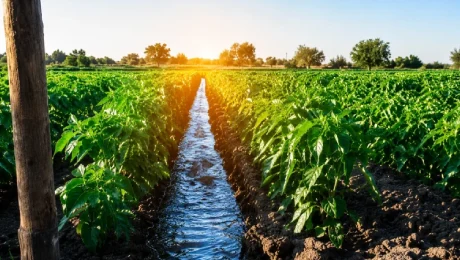
After well completion, high-pressure air blasting clears fine sediment and blockages in aquifer fractures and pores. It dredges underground water channels, enhances water permeability of the water-bearing layer, effectively increases well water yield and extends the service life of water wells.